How Montana landowners prepare for and recover from wildfire on conserved lands.
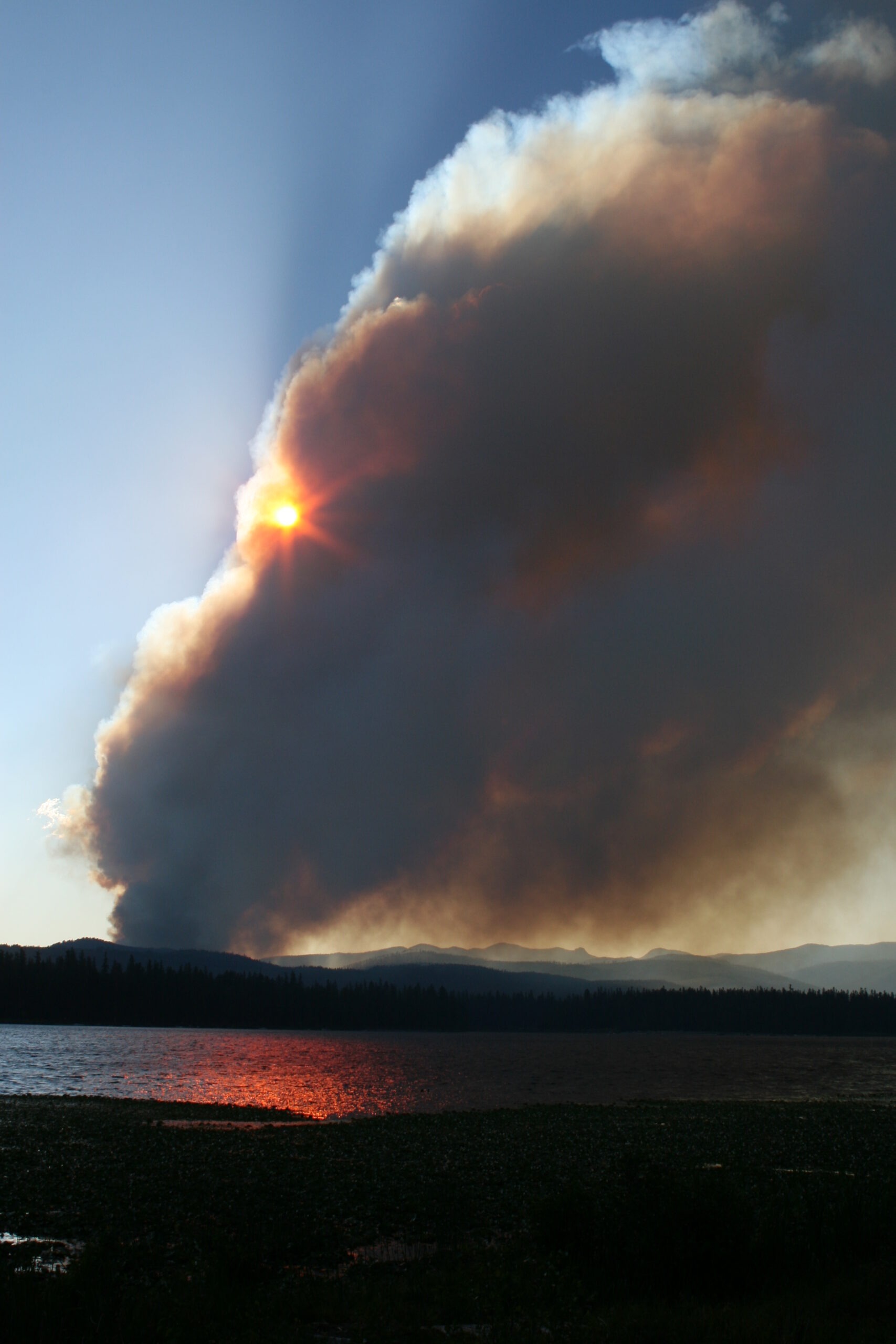
For many Montana landowners, placing a conservation easement on their property raises an understandable question: what happens if it burns?
Wildfire is as much a part of Montana’s landscape as the windswept grasslands or rugged peaks that shape the skyline. It can renew a forest or erase decades of work in a matter of hours. And while conservation easements protect land from development, they don’t shield it from the natural cycles of the West.
When fire comes, landowners with conservation easements can take immediate action. They don’t need permission to defend their homes, livestock, and property in an emergency. Afterward, they’re free to rebuild what was there before, just as the land itself begins to recover. The goal of a conservation easement, after all, isn’t to freeze a landscape in time – it’s to keep it whole through change.
Preparing for Fire
On a forested property in northwest Montana, one family has made wildfire preparation part of their routine.
“A good portion of what we’ve done right around the cabin has been designed specifically with fire in mind,” said Allen Chrisman, a co-owner of the property and retired fire management officer with the Flathead National Forest. With help from hazardous fuels grants and a small logger, they spaced out the tree crowns, removed ladder fuels that could carry fire into the canopy, and reduced jackpots of surface fuels.
“We chose to leave the best trees like western larch and Douglas fir, which develop fire resistance at maturity because of their thick bark, while thinning out more fire-susceptible species like lodgepole pine, Engelmann spruce, and subalpine fir,” he said.
Their timber management plan created defensible space around their buildings while maintaining a healthy, diverse forest. “You can still have a forest structure,” Chrisman explained, “but one that won’t be able to initiate or sustain a running crown fire.” About 15 acres around their cabins have been treated so thoroughly that, in Chrisman’s view, they would support no more than a surface fire. “In that case, an engine crew can burn out ahead of it and bring it down around the structures,” he said.
The family has seen the benefits of this work and continues to invest in hazardous fuels projects. Their MLR conservation easement allows them to actively manage the forest with both wildfire and ecosystem health in mind, which was a key factor in their decision to protect their land. For Chrisman, fire preparedness isn’t separate from conservation; it’s part of it. “We place a strong emphasis on forest diversity,” he said. “Diversity keeps the forest and the wildlife healthy, and it builds resilience.”
Facing the Flames
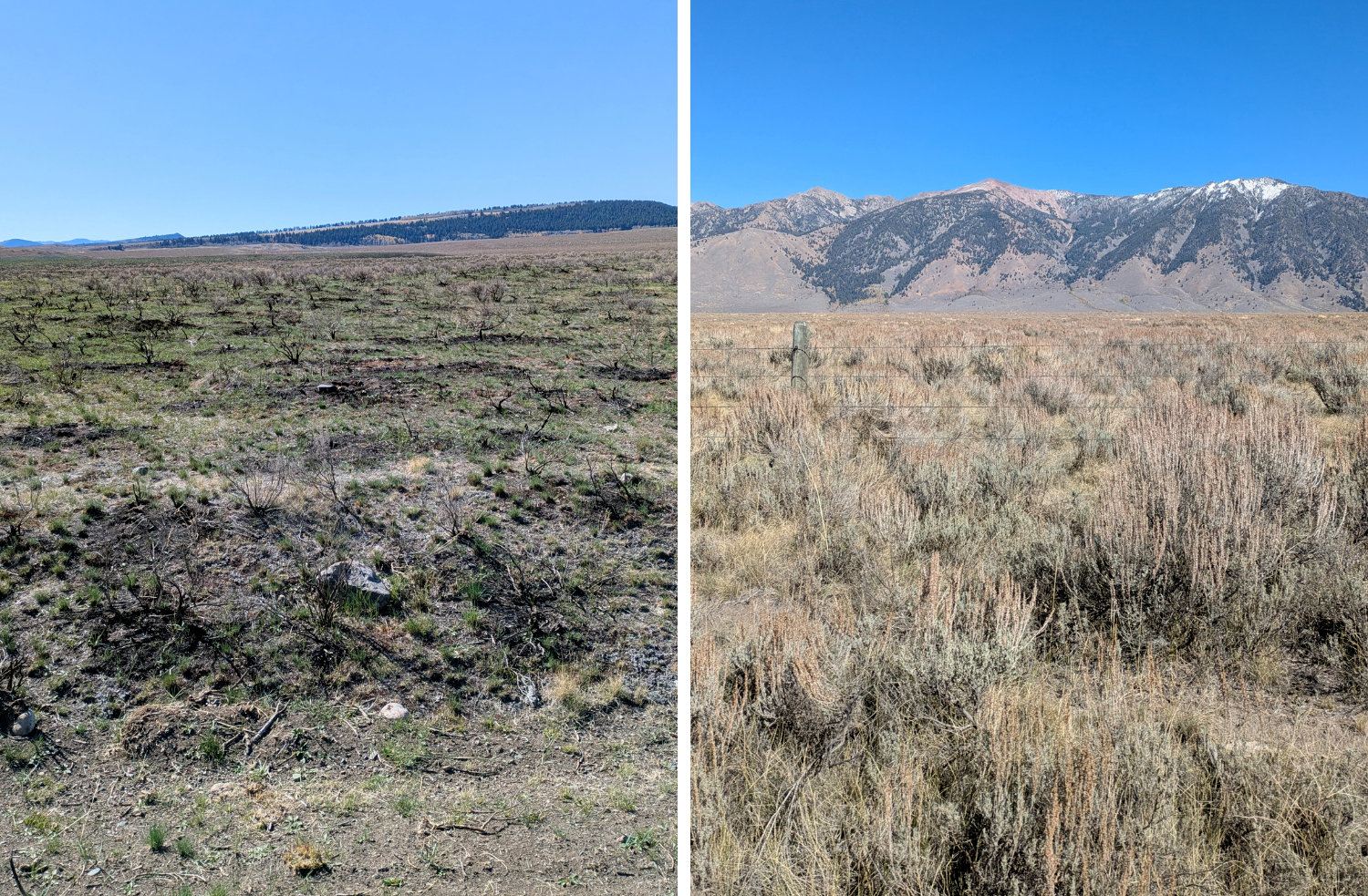
Even the best preparation can’t stop every fire. In Madison County, a lightning strike ignited the Horn Fire in August 2025. Fanned by strong winds, it burned nearly 3,000 acres before crews could contain it. Most of the burn occurred on the Three Dollar Ranch, which is protected by an MLR conservation easement.
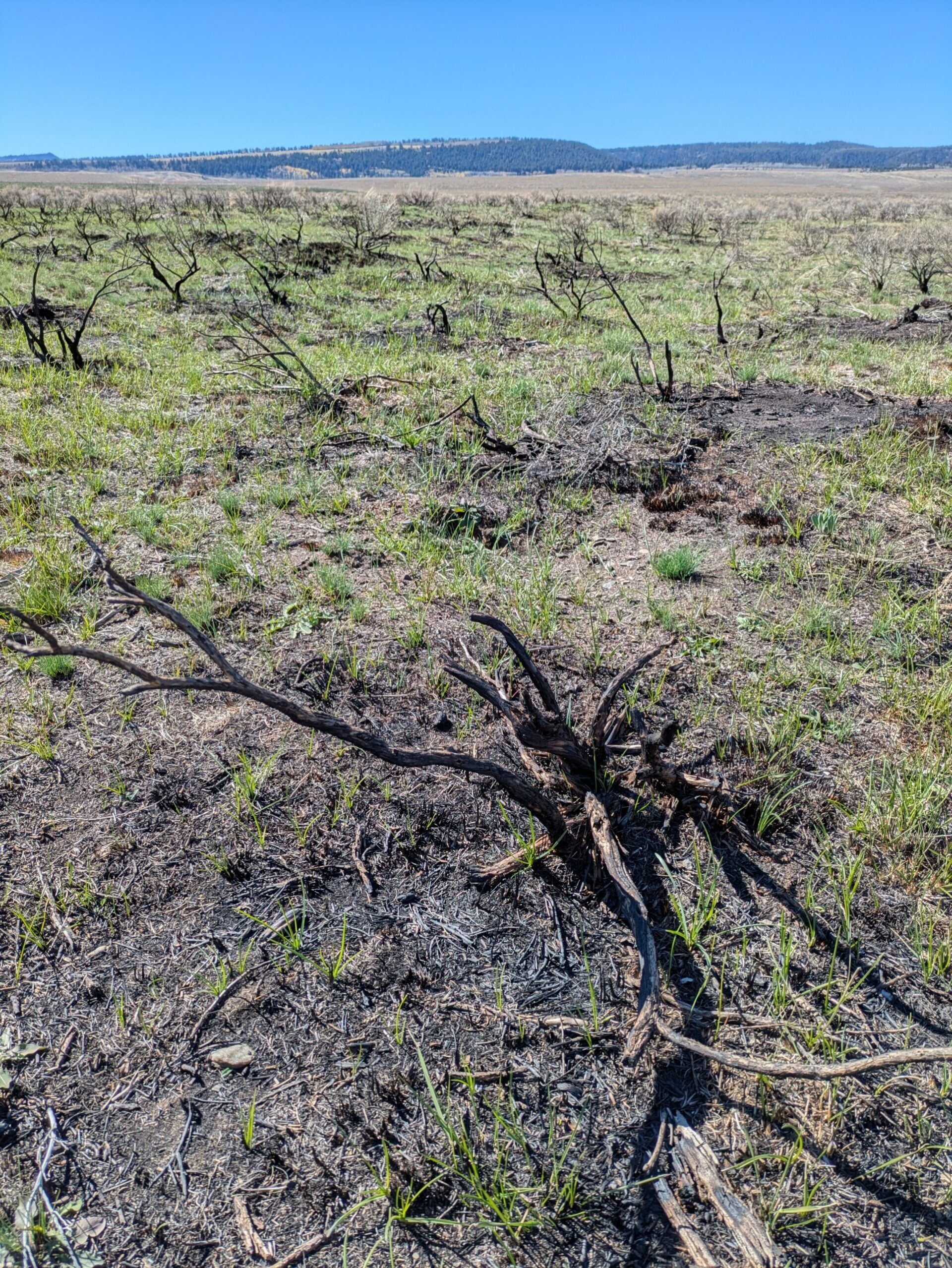
Burned sagebrush surrounded by two months of regrowth.
“It was the first big fire we’ve had in the 28 years I’ve been here,” said Marina Smith, the ranch manager. “It was a little heartbreaking, really. I know the ecology of fire and understand the benefits it can have, but it can also be devastating.”
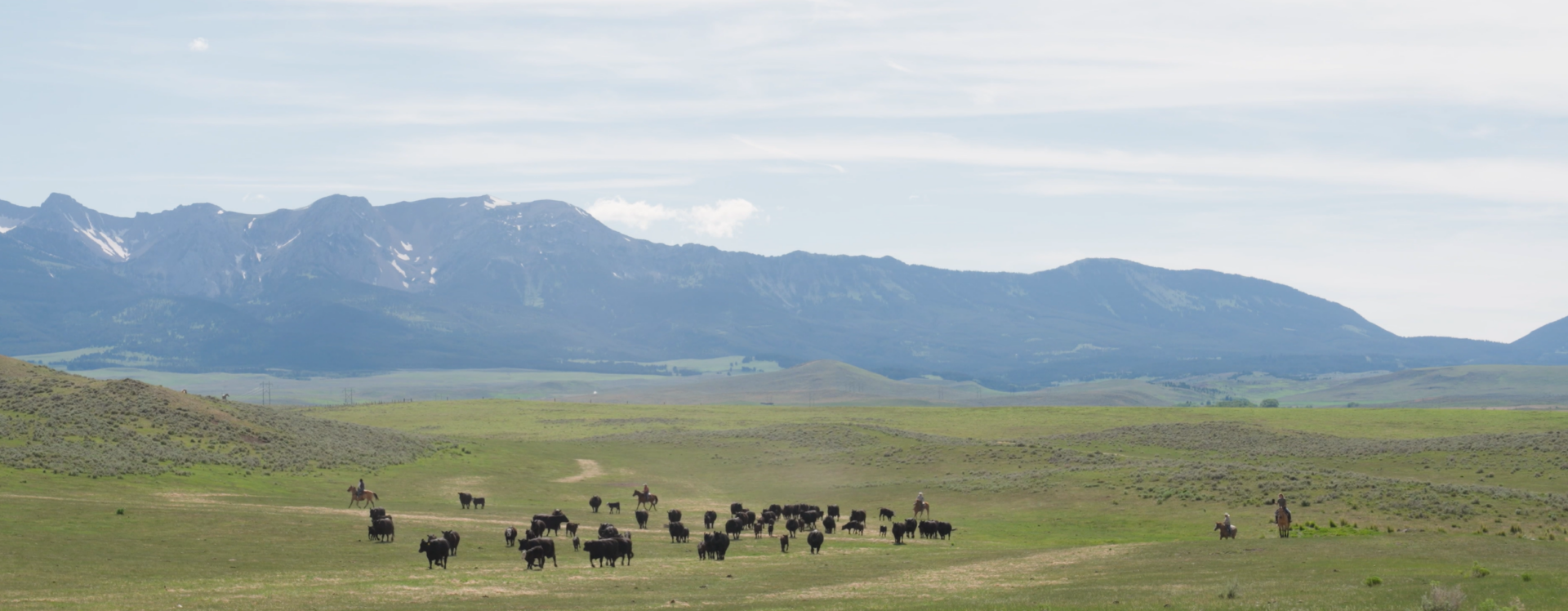
The flames took down miles of fencing and scorched leased pastures. “We lost one whole pasture that we leased to two different people. One of them had to move his cows and find new grass, which isn’t easy in late summer.” With luck and a few phone calls, they found a nearby ranch that wasn’t being grazed, giving the cattle a temporary home.
Now, patience is key. “I don’t want to graze that burned pasture for at least two years,” Smith said. “That’s about the time it takes for grasses to regenerate, rebuild their root systems, and become healthy again.”
Fire response and cleanup brought new challenges. “To contain the fire, the Montana Department of Natural Resources and Conservation (DNRC) cut huge dozer lines around it,” she said. Disturbed soil is vulnerable to weeds and invasive species like cheatgrass, which can spread rapidly. “DNRC came back within the first week after the fire to help reclaim the dozer lines and plant them with a native seed mix,” she added.
Having experienced this fire, Smith sees grazing as a vital part of fire management. “It’s one of your most beneficial tools,” she said. “There was a big difference in how the fire burned in areas that had been grazed versus not. You can’t always have everything grazed, but it really does make a difference.”
A Partnership Through Fire and Renewal
In Montana, fire will always be part of the story. For landowners with conservation easements, it’s not just about protection – it’s about partnership.
When flames arrive, landowners can act without hesitation, knowing their conservation easement stands beside them, not in their way. And when the smoke clears, MLR is still there as a steady partner and resource as they look toward what comes next.