Montana’s private landowners have long been stewards of the landscapes that define our state. Today, many are strengthening that commitment by protecting the wildlife that call it home, including one of our most important but often misunderstood species: bats.
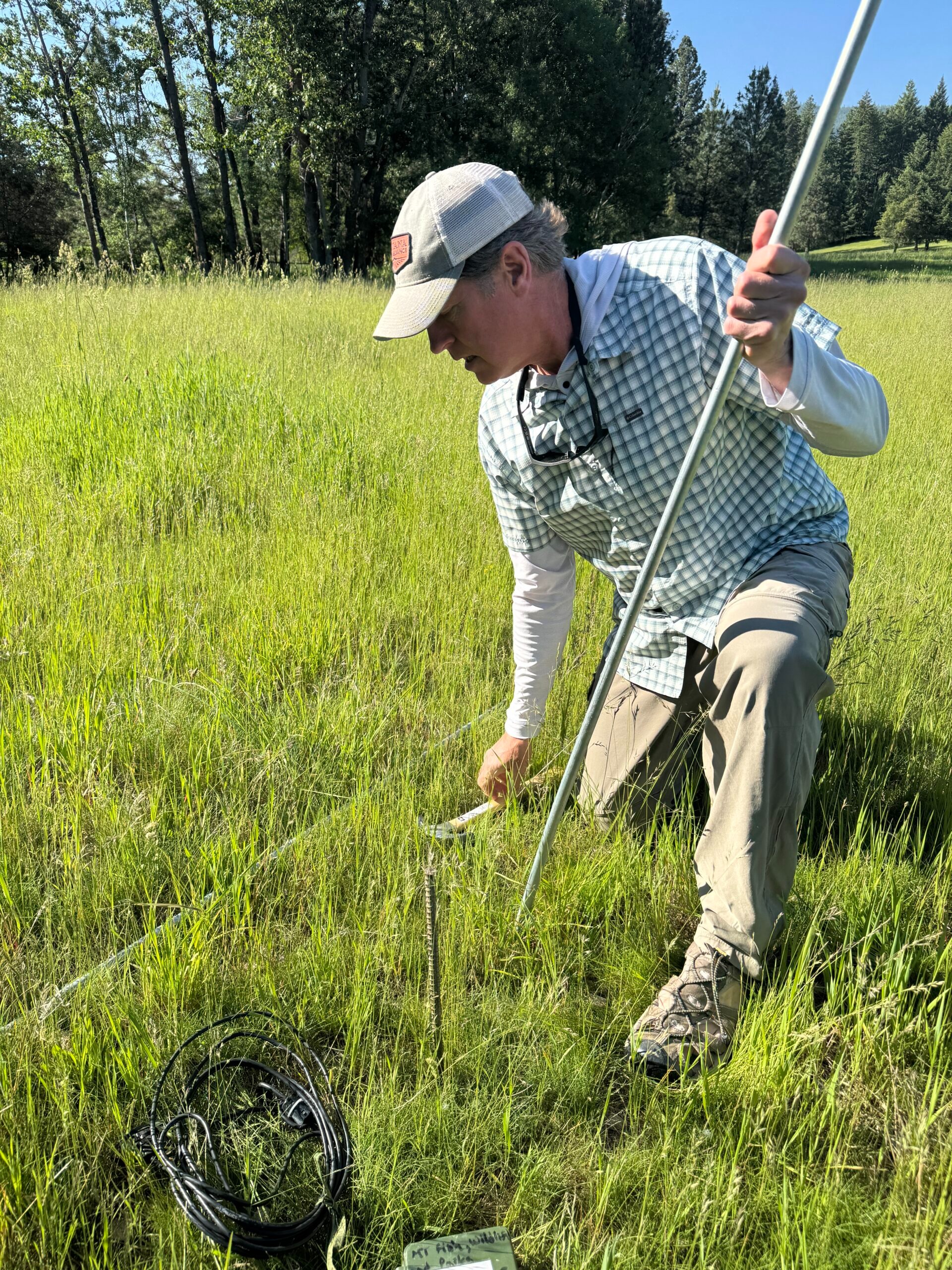
Through the North American Bat Monitoring Program (NABat), conservation-minded landowners across the state are volunteering to host acoustic monitoring stations on their property. These small devices record bat calls at night, allowing researchers to track species presence and population trends.
For the past six years, Matt Bell, GIS Manager with The Montana Land Reliance (MLR), has helped Montana Fish, Wildlife and Parks organize landowner participation in NABat. With the assistance of MLR Western Manager Mark Schiltz, Bell identified conservation easements near priority monitoring areas and reached out to landowners to gauge their interest in participating.
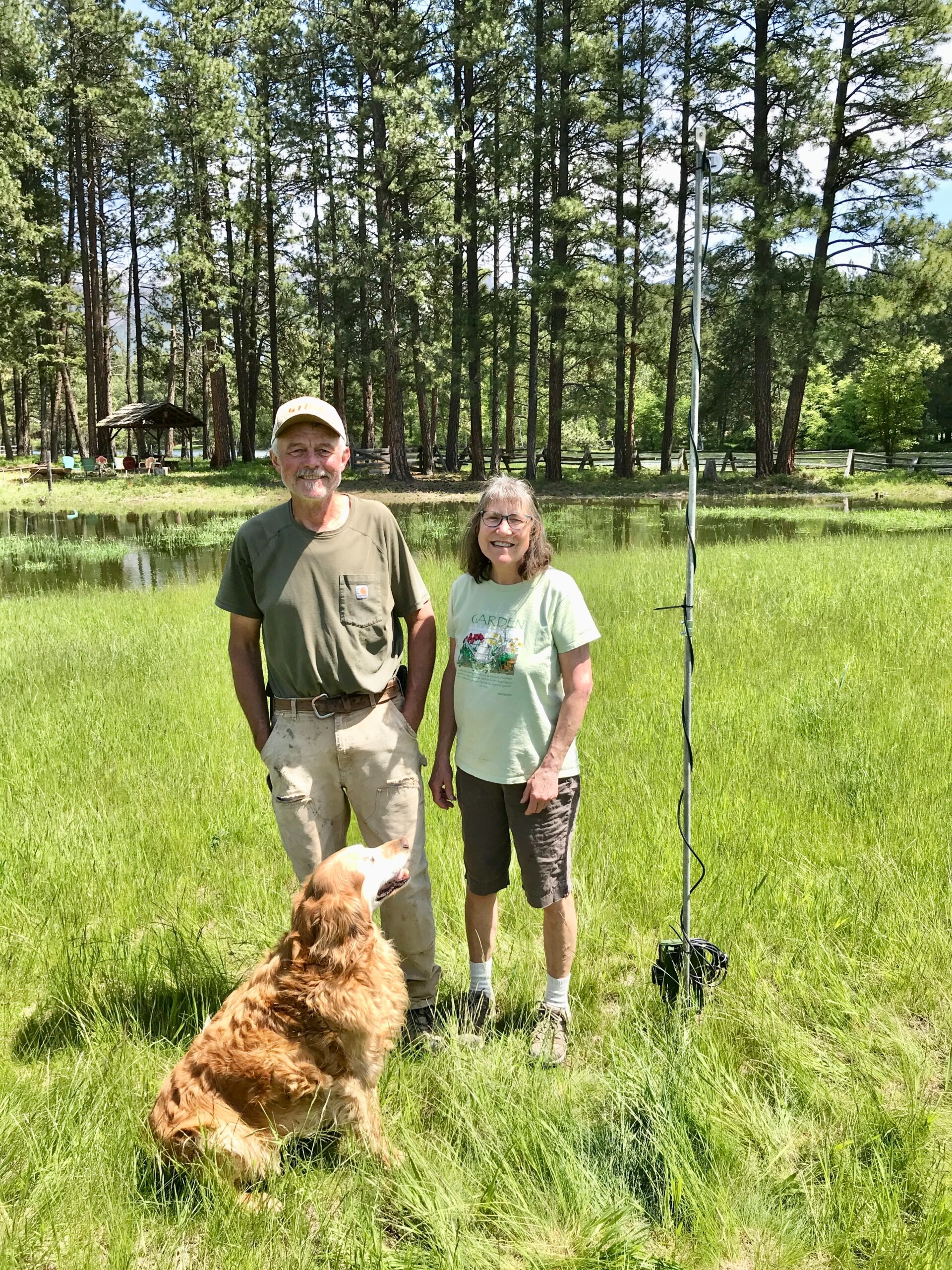
Denny and Kitty Kellogg of Bigfork were among the first to say yes.
Tucked along a quiet stretch of the Swan River in the Flathead Valley, the Kellogg’s property is a mosaic of open meadow, timbered uplands, and cattail-ringed wetlands. This unique habitat makes it a critical wildlife corridor linking the Swan and Mission Mountains; the kind of place where wildlife still moves freely between the mountains and the valley. Their land has been protected by an MLR conservation easement since 2019, and that stewardship ethic is something the Kelloggs live by every day.
“We recognize the benefits of having healthy bat populations in the area,” said Denny. “When the opportunity to participate in NABat came up, we were eager to assist in these efforts and learn more about the bats on our property.”
Working with Bell and Schiltz, the Kelloggs helped identify a good spot to set up the acoustic monitor. For four nights, the device quietly recorded bat calls that were later analyzed to identify which species were present and in what numbers. The results surprised them: ten of Montana’s fifteen known bat species had been detected.
“We’ve always been aware of bats on the property,” said Kitty, “but we had no idea there were so many different species living here and using the same habitat.”
If the landowners are willing, NABat surveys will be repeated annually to track changes over time. Each monitoring site adds a new piece to a much larger puzzle, helping researchers understand how Montana’s bats are faring and where conservation efforts are most urgently needed.
“Bats are the most important wild mammal when it comes to agriculture in North America,” said Bell. “They’re natural pest control machines.” A single bat can eat thousands of insects in a night, reducing crop damage and helping ranchers and farmers rely less on pesticides. In Montana alone, bats contribute an estimated $680 million in pest control to the agricultural economy each year. That figure grows to more than $3.7 billion annually in all of North America, according to USGS data.
Despite their value, bat populations are in crisis. Across the continent, multiple species have been devastated by white-nose syndrome, a fast-spreading fungal disease that has killed millions of bats. In some species, populations have dropped by over 90%.
“White-nose syndrome has caused catastrophic losses in other parts of the country, and we’re seeing early signs of decline here in Montana,” said Bell. “The only way to know how bats here are doing is through long-term monitoring, and we can’t do that without people like the Kelloggs.”
For the Kelloggs, participating in NABat is a natural extension of their conservation values.
“Part of the Montana ethic is helping your friends and neighbors,” said Denny. “That includes protecting open space and wildlife habitat for the next generation, and if helping monitor bats can play a small role in that, we’re happy to do it.”
Thanks to families like the Kelloggs, Montana’s data contributions to NABat continue to grow. In addition to the site in the Flathead, three other easement-holding families in central and eastern Montana have opted to participate in NABat as well. Volunteering for wildlife monitoring efforts is just one more way these landowners are giving back to the land they love. Together, we’re helping ensure that bats – and the benefits they bring to our farms, ranches, and ecosystems – remain a thriving part of Montana’s landscape.
To learn more about the NABat program, visit https://www.nabatmonitoring.org/.